

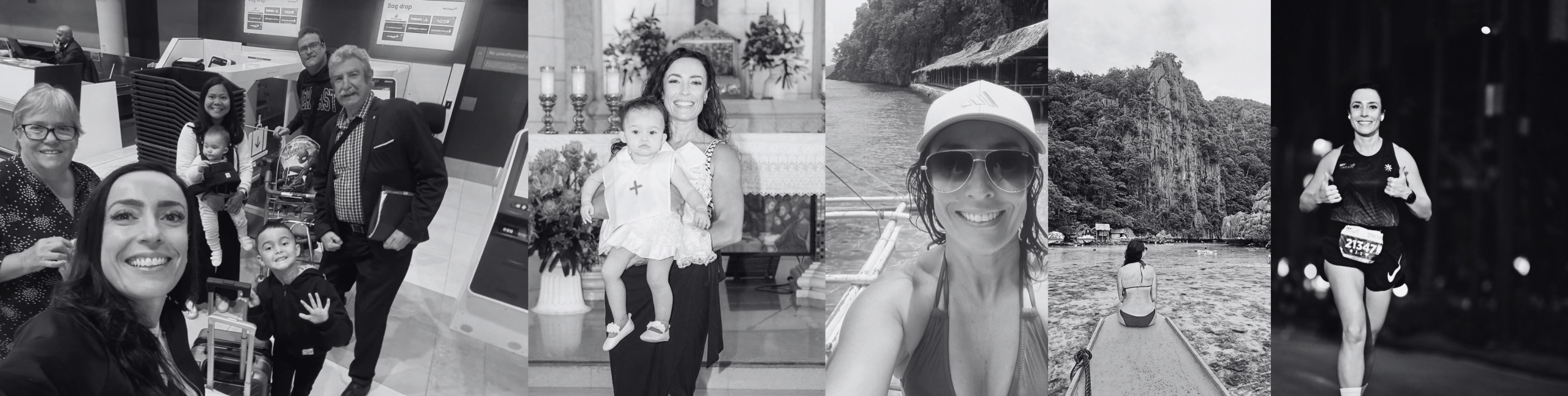
I took four weeks off in the Philippines. My niece was being christened and I’d entered the Makati Half Marathon, so I went over with my family.
Stepping away from the business felt strange and great at the same time. It turned out to be the reset I didn’t know how badly I needed.
Before I left I’d recorded an expert session with Paul Claessen. An expert, on one subject: AI.
Paul is a business coach with a software engineering background who ran a Pizza Hut in Subiaco before any of it. He was writing early versions of this stuff at uni in 1990. He has been in my corner for four and a half years, telling me the version I need rather than the one I want.
Somewhere in that hour he put words to something I’d been feeling for months. This work will leave you fundamentally exhausted, he said. You spend your whole day at the front of your brain making decisions.
That was the state I got on the plane in.
He said other things I haven’t been able to shake either.
Bookkeeping is dead, he said, and the fact people still pay for it blows his mind. He won’t pay a lawyer to draft a contract any more either, he’ll pay one for strategy and a cool head in a tight spot. Then he turned it on himself. The coaching part of his own business is going to zero, and he isn’t precious about it.
An hour of a man calmly explaining which parts of everyone’s work are about to be worth nothing.
Then in the last ten minutes he stopped talking about tools altogether.
He said the thing he’d train his mind on isn’t AI at all. It’s people. That we already live in the best times humanity has ever had, that this is the start of something the size of the Industrial Revolution, and that he’d put himself at 80 percent confident the global economy grows tenfold in ten years.
From the same man, in the same hour.
There’s an essay called Machines of Loving Grace, by Dario Amodei, who runs Anthropic. It is the most hopeful thing I have read about any of this, written by someone who spends most of his working life warning people.
His argument is that if this goes well we get a “compressed 21st century”. Fifty to a hundred years of progress inside five or ten. Most cancer gone. He is careful about the parts that don’t bend to intelligence and names them plainly. Human institutions. Corruption. The stubborn fact that people have to agree to things.
By the end of our hour Paul was saying the same thing in his own words. That essay is about humanity. Paul was talking about your Tuesday.
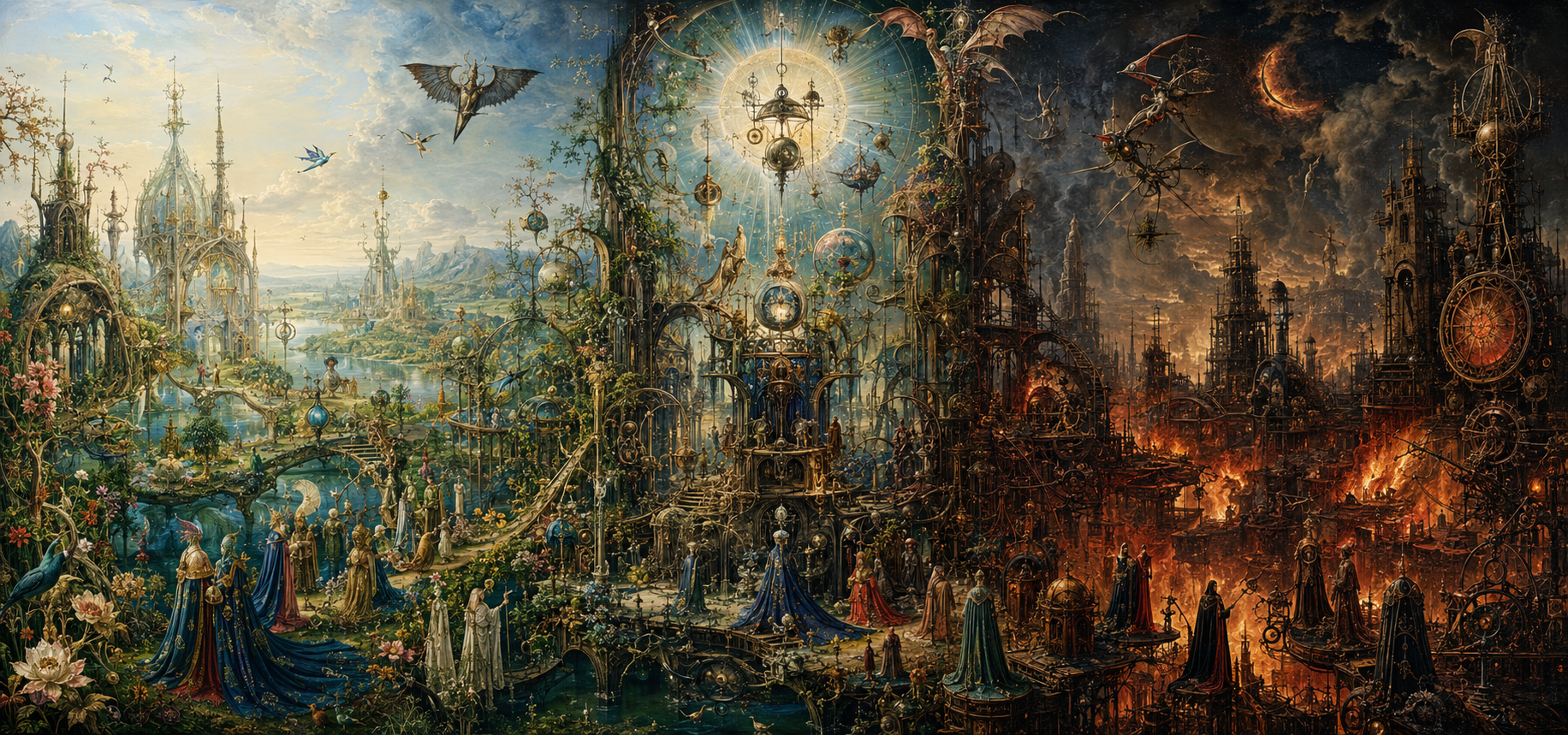
Machines of Ruin and Loving Grace. Created by Tracy using AI and inspired by Hieronymus Bosch’s The Garden of Earthly Delights, it explores the tension between progress and destruction. A flourishing world of nature, beauty and possibility gives way to a dark mechanical landscape. Technology can nurture humanity, or consume it.
Here’s what I’m sitting with.
Paul’s other example that day was handbags. A Louis Vuitton and a Mimco come off the same machines, same process, same technology. One is 200 dollars. One is four thousand. Same production, twenty times the price.
Technology, he said, has never once pushed a price up in the history of the world. The only thing that has ever done that is brand.
Then the line I haven’t been able to put down. Brand is confidence. Not drawings. Not a logo. Confidence.
That’s the shift. When anyone can make the thing, making it stops being worth paying for. What people are left choosing between is the brand around it. Whether they trust you. Whether they can tell your work from the one next to it. Whether they feel certain when they pick you.
That’s where the price sits now, and it’s the only part nobody can copy off you.
I don’t agree with every part of it. But I’ve stopped arguing about whether the making gets cheap, because it does. The argument worth having is what you build with the time.
So the homework I’m giving myself, and you, is small. And it’s Paul’s, not mine.
How do you serve people? And what does a brighter future look like for the people you serve?
Write down an answer to both. Not a mission statement. Two sentences you’d actually say out loud.
Paul keeps a set of rules he lives by. This is the one I keep coming back to.
13. Serve like it’s a moral obligation. Deliver value to customers like it’s your responsibility, not just a transaction.
Nothing about that changes if the tools get a hundred times better.
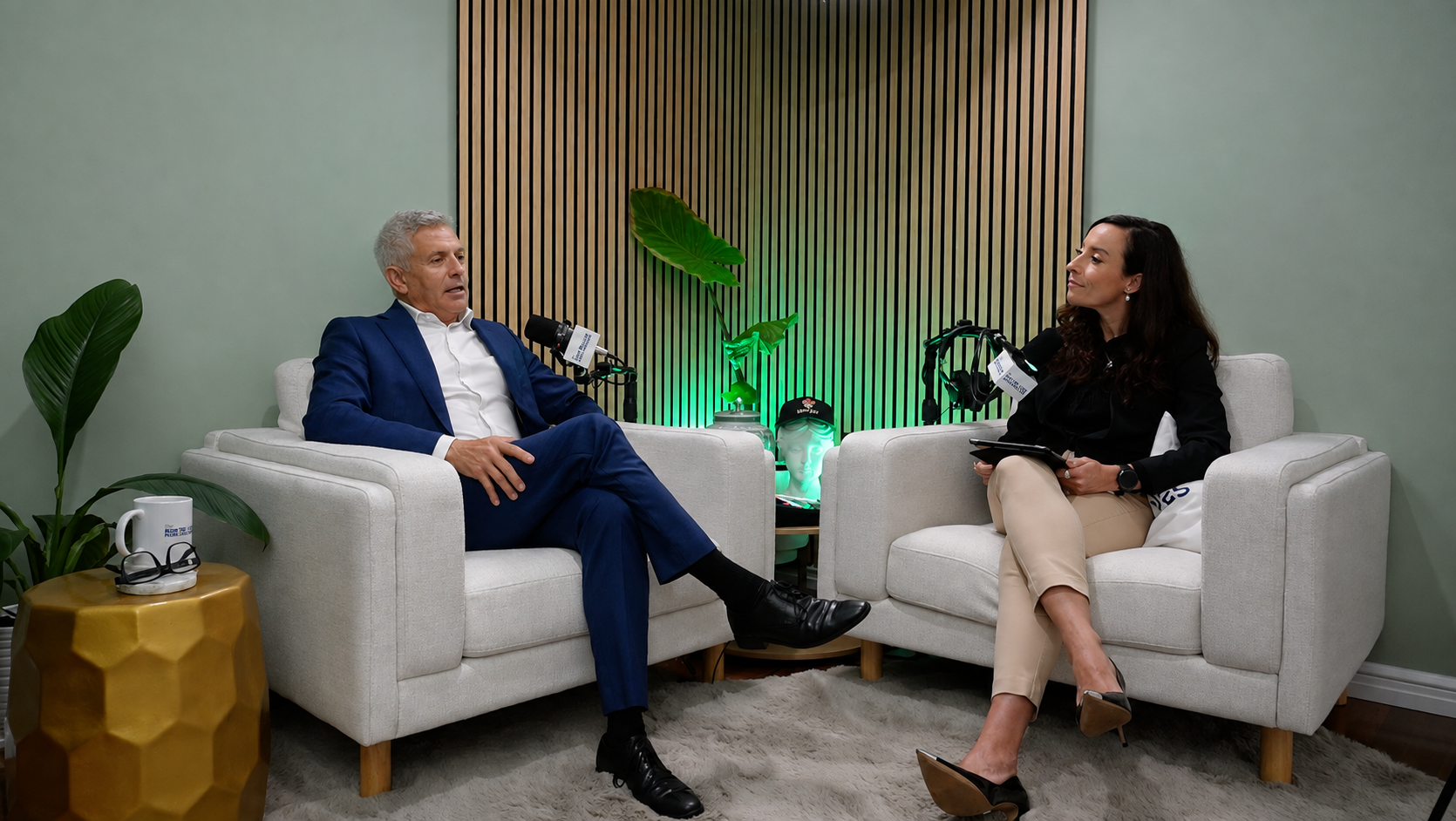
EPISODE 149: Paul Claessen
With Paul Claessen, business coach and founder of Ignite, software engineer by training, a regular on the show
Paul has been writing AI since 1990, back when you could type a question, wait two minutes and get back the word no. He opened this one by admitting he used to think AI was a threat, to his own business and to a lot of his clients’. He has landed somewhere else since, and now he teaches it. Ignite, his group coaching program, runs a dedicated AI session on how business owners can actually put this to work.
What you’ll take away:
- Twelve months building the financial engine of a business with AI. Paul asked the owner two questions he couldn’t answer, and he rewrote the lot from the ground up
- Why he says you won’t be logging into Xero this time next year, and that the software you open every day is about to feel ridiculous
- Separate the task from the job. The sentence that changed how he uses his own team
- The warning label. Prepare to be fundamentally exhausted, and why his sugar intake went up
- What he said to a marketing agency whose staff told him they didn’t like using AI. Four words.
▶ Listen here: YouTube | Spotify | Apple Podcasts | Buzzsprout
P.S.
Brand is confidence. Paul’s words, and he has nothing to gain from saying them.
I keep a handful of free Brand Discovery sessions aside each month, just for TRBLC listeners. One hour, with me. We look at where your brand is actually landing and what’s holding it back.